




Main Operating Algorithms of Trackers: How to Find a GPS Tracker in a Car?
How to find a GPS tracker in a car?
In the modern world, GPS trackers have become one of the most common tools for covert vehicle monitoring and surveillance. They are widely used both in logistics and in illegal tracking operations.
To find a GPS tracker in a car, using only a field detector or performing a visual inspection is not enough. It is necessary to understand the architecture of such devices. The ways they transmit data, and the patterns of their activity.
This becomes especially important when dealing with autonomous trackers that can remain silent for weeks, revealing themselves only through brief data transmissions.
Modern trackers allow very detailed configuration. As a result, we rarely know in advance what algorithm or operating mode is configured on a specific device.
First of all, this concerns the GSM module algorithm. Because it is precisely through traces of GSM activity that we try to detect the tracker.
1) Constant Active Mode (Real-Time Tracking)
These are classic online trackers that continuously transmit location data to a server through GPRS in real time.
Such devices are typically connected to the vehicle’s wiring to receive power. They may also include additional features such as:
- engine immobilization
- fuel level monitoring
- remote control functions
Because GPRS belongs to the 2G GSM generation, these devices can be detected using professional electromagnetic field detectors. The tracker constantly transmits data, which makes detection possible.
This constant transmission is the key condition that allows field detectors to locate the installation area.
In most cases it is difficult to pinpoint the exact location. But with a good detector and favorable conditions it is possible to identify the approximate area where the search should begin.
Searching for a GPS tracker in a car with a field detector should ideally be performed in a shielded environment. Or at least in a private underground parking garage.
You must ensure that no other people or vehicles are nearby. The signal detected must belong only to your vehicle. The localization process usually involves systematic disassembly of the car in the suspected area.
At first glance, this method sounds quite promising. However, there is one major problem.
Modern vehicles already contain legitimate GSM modules with SIM cards.
Previously these were mainly satellite alarm systems such as Caesar Satellite, Cobra, or Arkan. Many vehicles were factory-equipped with them.
Later, advanced alarm systems such as Pandora appeared. These systems used SIM cards for remote start and other functions.
Then automakers began installing telematics units in vehicles. These are used in brands like BMW, Mercedes and others. They connect the vehicle to the owner via mobile applications such as MyBMW or Mercedes Connect.
Additionally, many vehicles now have Android head units replacing factory radios. These systems provide features such as Apple CarPlay, YouTube, or navigation apps and also use SIM cards for internet access.
As a result, if your car is less than ten years old, it most likely already contains at least one SIM card.
The problem is that field detectors cannot distinguish between different GSM modules.
You may hear the characteristic interference, but you will not know how many sources are present. There may be one source or two. One could be a legitimate device in your car, and another could be a hidden tracker or listening device.
If the search is conducted in an unprepared environment with other vehicles and people nearby, electromagnetic noise becomes overwhelming.
For this reason, field detectors have become more of a supplementary tool when searching for GPS trackers or surveillance devices in a vehicle.
For such cases, we use our proprietary Harpoon-Auto detection system.
This system identifies and interacts with specific GSM devices while working together with the Hunter Pro field detector, which helps localize the signal source.
2) Standby Mode
In this mode, the GSM module remains powered on all the time. At first glance this might seem easy to detect, but it is not that simple. While in standby mode, the GSM transmitter does not send any signals. As a result, it produces no electromagnetic radiation. It simply waits for an incoming command from the mobile network — usually an SMS or a phone call.
Until that happens, the device remains completely passive. No field detector, regardless of price, will detect it. The tracker may remain in this state indefinitely until the owner decides to access it. For example, the owner may send an SMS request asking for the current coordinates. At that moment the tracker briefly activates its transmitter.
This exchange usually lasts only one or two seconds. Even if a detector catches this signal, it is difficult to interpret it.
Was it a tracker? car alarm? Was it a passerby using a phone? Or was it a nearby base station? There are many possibilities.
This is why we are skeptical of specialists who claim to detect GPS trackers outdoors using only a field detector.
So what can you do if you want to find a GPS tracker in a car? You could sit with a detector and wait, hoping that the tracker owner will activate it again.
You might wait for a day, two days, or even a week. Maybe you will catch another signal — but again you will not know its origin.
The situation depends entirely on the tracker owner’s actions, not yours. As with the first method, a controlled environment is also required.
There is also a popular myth promoted by some “experts”. They claim that using GSM jammers will force the tracker to re-register in the network and reveal itself.
This is often described as a “secret professional trick”.
In reality, it is a myth, and we will explain why in a separate article.
For trackers operating in standby mode, our Harpoon-Auto system combined with the Hunter Pro field detector provides reliable results.
3) Sleep Mode (Beacon Mode)
This is the most difficult scenario. The GSM module of the tracker remains powered off 99.9% of the time. At intervals known only to the tracker owner, it briefly powers on, sends either the current location or a stored route log, and then shuts down again. These activations are controlled by internal timers.
The interval may be anything once a day, every three days, once a week, once a month.
During the rest of the time the transmitter is completely silent. No detector can detect a device that is powered off.
In this situation there are only two practical options.
Option 1: Long-Term Monitoring
This requires a shielded environment and professional monitoring equipment. The result depends entirely on how long the monitoring lasts. If the vehicle is monitored for 24 hours, the result will simply be: “No tracker transmitted during the last 24 hours.” The tracker might activate tomorrow or next week.
It is not the most convenient scenario, but it is the reality.
Option 2: Mechanical Vehicle Inspection
This means physically disassembling parts of the vehicle. The process starts with accessible areas and gradually moves deeper. This approach is time-consuming, expensive, and sometimes risky. Leasing companies sometimes hide trackers inside structural parts of the car, such as frame rails. Some trackers are even sealed inside headlight housings.
Technically we could dismantle everything, but that is rarely what a vehicle owner wants. In practice we inspect the most common installation locations and try to achieve the best possible result.
Of course, there is always a third option — hiring someone online who promises to find a tracker in 30 minutes for a very small fee ha-ha.
But real detection work does not operate that way.
Over the years we have accumulated extensive practical experience in detecting hidden GPS trackers in vehicles. Sometimes luck is on our side. The tracker might transmit not once a month but every three hours. In that case, if you leave the vehicle with us for three hours, we will detect it. But if someone expects a guaranteed result in 30 minutes, that is simply unrealistic.
Pricing also becomes complicated in such cases. Unlike other services, where we can estimate the work in advance, every search for a hidden tracker can be unpredictable.
A tracker may be sealed inside a headlight assembly, for example.
Therefore, each case requires a reasonable and practical approach.
In many real situations, the tracker transmission interval is not extremely long.
For example, if someone arrives at your location only 15 minutes after you get there, it is very likely that the tracker transmits much more frequently than once per week.
Trackers with such intervals are reliably detected.
Thanks to the capabilities of our Harpoon-Auto system, we can sometimes identify the controlling phone number of the tracker owner even before physically locating the device.
In one case, a client recognized the number immediately. After receiving confirmation, he asked us to stop the search and said he would resolve the situation in another way.
And we had no objections.
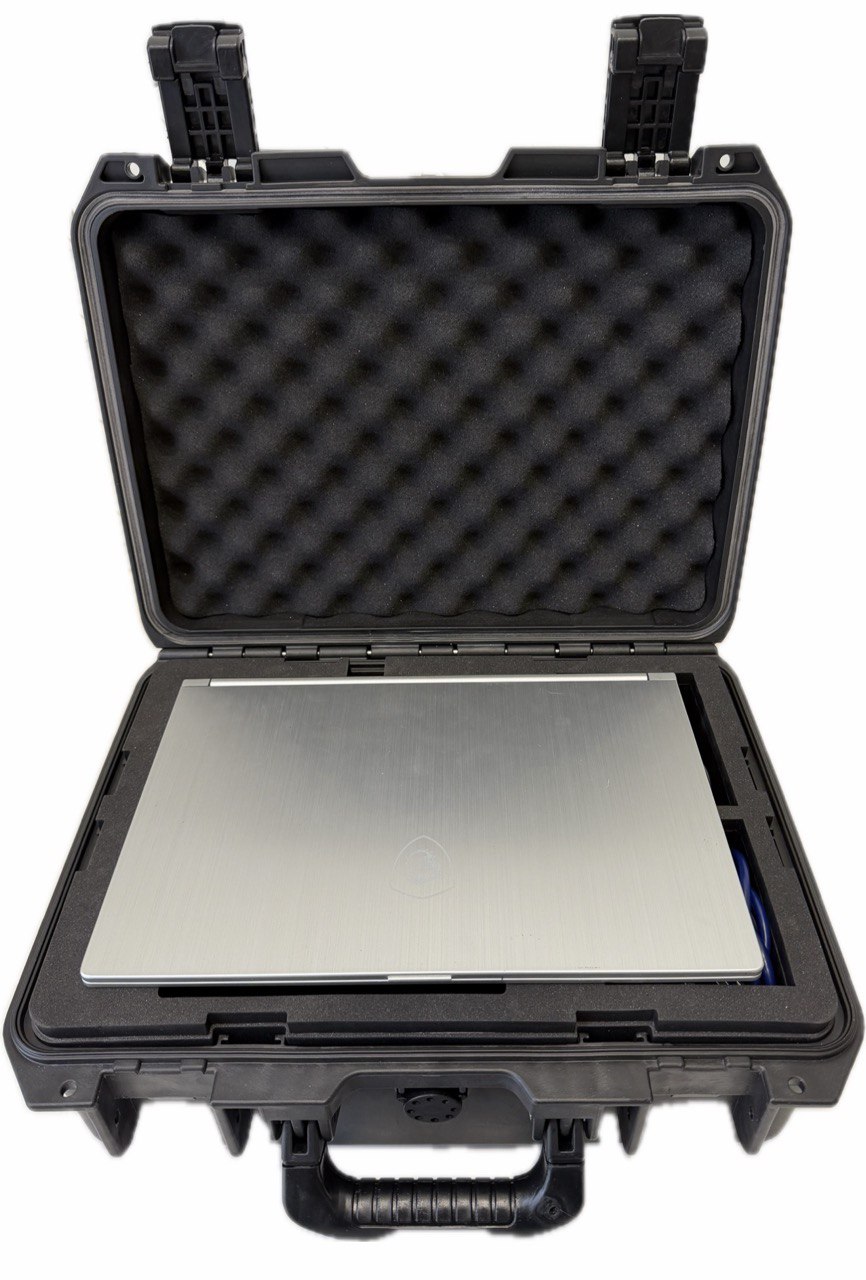

GSM Base Station Simulator (IMSI Catcher)
System for Detecting GPS Trackers, GSM Bugs and Cellular Transmitters The Harpoon GSM Base Station Simulator is a professional counter-surveillance system designed…

Vehicle bug sweeping equipment Harpoon-Auto — GSM and GPS tracker locator.
Vehicle bug sweeping is a technically complex procedure that requires multiple specialized detection methodologies. Harpoon-Auto is a specialized hardware–software system designed…
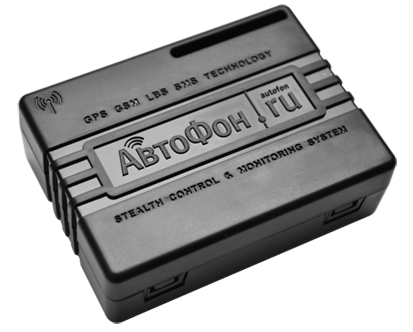
How to Check a Car for Bugs: Detecting GPS Trackers and Listening Devices
Checking a car for bugs is not a simple task. To check a car for bugs, GPS trackers, or hidden…